
Land Survey Cost: What You’re Really Paying For
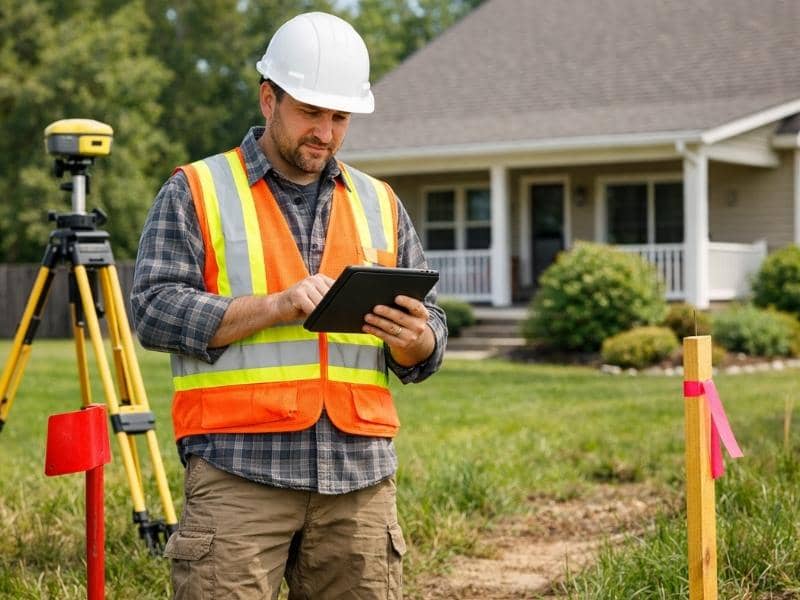
A land survey typically costs between $376 and $745 for a standard residential property, with a national average of around $530. However, the price you get quoted may look very different depending on what type of survey you need, the size of your lot, and where you live.
If you have ever received a land survey quote and wondered why it is so high, or why your neighbor paid far less for what seems like the same thing, you are not alone. Land survey costs are not fixed. They shift based on several factors that most property owners know nothing about until they are already in the process.
What Is the Average Cost of a Land Survey?
The average cost for a land survey sits around $530. Most homeowners pay somewhere between $376 and $745 for a standard residential property survey. That said, more complex jobs can run well above $1,000.
These numbers are a useful starting point, but they are just averages. Your actual cost depends heavily on the type of survey you need.
Cost by Survey Type
| Survey Type | Typical Cost Range |
| Boundary Survey | $300 to $1,500 |
| Topographic Survey | $500 to $1,200 |
| ALTA Survey | $2,000 to $3,000+ |
| As-Built Survey | $800 to $2,500 |
| Mortgage / Title Survey | $300 to $700 |
| Metes and Bounds Survey | $500 to $1,500 |
Cost by Property Size
Property size is one of the biggest drivers of price. A small city lot might take a surveyor a few hours to measure and document. A large rural parcel with unclear deed records can take days. Here is a general breakdown:
- Less than 1 acre: $300 to $600
- 1 to 5 acres: $600 to $1,200
- 5 to 10 acres: $1,000 to $2,000
- Over 10 acres: $2,000 and above
Cost by Location
Where you live plays a big role in what you pay. Urban areas with higher labor costs tend to have higher surveying fees. Rural areas may charge more because of travel time and limited access. States with active real estate markets like California, Texas, and Florida tend to have higher average rates than less populated states.
Boundary Survey Cost vs. Property Survey Cost: Is There a Difference?
These two terms are often used interchangeably, but they are not always the same thing. A boundary survey focuses specifically on establishing or confirming the legal lines of a property. A property survey is a broader term that can refer to any professional assessment of a parcel, including its boundaries, features, or elevation.
For most residential needs, a boundary survey is what people mean when they say property survey. Boundary survey costs typically range from $300 to $1,500, depending on lot size and record availability.
Home Survey Cost: What Are You Paying For?
When people search for home survey costs, they are usually asking about one of two things: a property boundary survey before buying a home, or a structural home inspection. These are very different services.
A property boundary survey for a home purchase usually costs between $400 and $700. A structural home inspection, done by a licensed home inspector rather than a land surveyor, typically costs between $300 and $500. Make sure you know which one you need before you request a quote.
What Makes Land Survey Prices Go Up or Down?
This is the part most people miss. Two properties on the same street can have very different survey costs. Here is why.
Terrain and Vegetation
Flat, open lots are the easiest and cheapest to survey. Steep slopes, dense trees, swampy ground, or areas with poor access all take more time and effort. A wooded rural lot can cost two to three times more than a clear suburban lot of the same size.
Property History and Records
If your property has clean, updated deed records and prior surveys on file, a surveyor can work faster and charge less. If the records are old, incomplete, or disputed, the surveyor has to do extra research. That research costs time and money.
Urgency and Turnaround Time
Standard turnaround for a land survey is usually one to three weeks. If you need results faster, expect to pay a rush fee. Some surveyors charge 25 to 50 percent more for expedited work.
Number of Corners and Monuments
More property corners mean more points to locate and mark. Larger lots or irregularly shaped parcels with many corners take longer to survey. Property line markers, also called monuments, may need to be set or reset, which adds to the total cost.
Equipment and Technology
Surveyors today use GPS, total stations, and in some cases LiDAR mapping to collect data. LiDAR mapping uses laser scanning to create highly accurate terrain models. It is especially useful for large or complex properties and delivers more detailed results, particularly for topographic surveys or large subdivision work. It costs more than traditional methods but the accuracy it provides is often worth it.
How to Get a Fair Land Survey Quote
Getting a fair price starts with knowing what to ask. Here are a few practical steps:
- Ask what type of survey is included in the quote. A boundary survey and a topographic survey are priced differently.
- Find out if the quote includes setting property line markers or just locating them.
- Ask about the turnaround time and whether rush fees apply.
- Request at least two or three quotes from licensed surveyors in your area to compare pricing.
- Verify that the surveyor is licensed in your state. In the U.S., there are over 140,000 licensed surveyors actively working, according to the Bureau of Labor Statistics.
Licensed surveyors typically charge between $100 and $200 per hour for their time, though many jobs are quoted as flat fees. Always ask upfront which pricing model applies to your job.